Vital signs vary significantly across age groups. A heart rate or blood pressure that is normal for a child may be abnormal in an adult, making age-specific interpretation essential in EMS.
This guide covers normal vital signs by age ranges from newborns to geriatric patients, including pediatric blood pressure formulas, red flag thresholds, and key field assessment points.
Designed for quick reference, NREMT preparation, and clinical practice, it helps EMS providers accurately interpret vital signs and identify time-critical emergencies.
Why Normal Vital Signs Change With Age
Vital signs change throughout life as the cardiovascular and respiratory systems develop and age. Infants normally have higher heart and respiratory rates, while blood pressure gradually increases as children grow.
In older adults, age-related physiological changes and medications can alter expected vital sign responses.
For this reason, serial vital sign trends are often more informative than a single reading when assessing geriatric patients.
Master Reference Table — Normal Vital Signs by Age
If you're new to interpreting monitor parameters themselves, start with our guide how to read a vitals monitor.
| Age Group | Heart Rate (bpm) | Resp Rate (/min) | Systolic BP (mmHg) | SpO₂ | Temp |
|---|---|---|---|---|---|
| Neonate (0–28 days) | 100–205 | 30–50 | 60–76 | ≥95% | 36.5–37.5°C |
| Infant (1–12 months) | 100–190 | 30–53 | 72–104 | ≥95% | 36.5–37.5°C |
| Toddler (1–3 years) | 98–140 | 22–37 | 86–106 | ≥95% | 36.5–37.5°C |
| Preschool (3–5 years) | 80–120 | 20–28 | 89–112 | ≥95% | 36.5–37.5°C |
| School Age (6–12 years) | 75–118 | 18–25 | 97–120 | ≥95% | 36.1–37.2°C |
| Adolescent (13–17 years) | 60–100 | 12–20 | 112–128 | ≥95% | 36.1–37.2°C |
| Adult (18–64 years) | 60–100 | 12–20 | ~120/80 mmHg | 95–100% | 36.1–37.2°C |
| Geriatric (65+ years) | 60–100* | 12–18 | 130–140* | ≥94%* | 36.0–37.0°C* |
*Geriatric ranges require individual baseline interpretation see section below.
NREMT Note: These values align with the National Emergency Medical Services Educational Standards (NEMSES). Use these specifically for the NREMT cognitive exam not general clinical guidelines, which may differ slightly by source.
Pediatric Vital Signs — What EMS Needs to Know
Patients present the most variation in normal vital signs for pediatrics by age, and the most risk when those ranges are misapplied.
Using adult reference values to assess a child leads directly to underrecognizing both shock and respiratory failure, two of the most time-critical prehospital emergencies.
Neonates and Infants (0–12 months)
Neonates are obligate nose-breathers, so nasal obstruction alone can cause respiratory distress.
They are also prone to heat loss, making temperature control important. Persistent tachycardia is the earliest sign of shock, while hypotension is a late finding.
A heart rate above 180 bpm with signs of poor perfusion requires immediate EMS intervention.
Toddlers and Preschool (1–5 years)
Anxiety and fever commonly cause tachycardia, so heart rate should be reassessed after the child has calmed.
Respiratory distress is identified by increased work of breathing, including nasal flaring, grunting, and chest retractions. Pediatric blood pressure formulas apply from age one onward.
School Age and Adolescent (6–17 years)
Vital signs gradually approach adult values, but children can maintain normal blood pressure despite early shock. Hypotension is therefore a late and critical sign.
Any ill-appearing child with a heart rate above 130 bpm and borderline blood pressure requires immediate ALS assessment.
Adult Normal Vital Signs — The Baseline and Its Exceptions
Normal vital signs for adults aged 18 to 64, the reference ranges are the most familiar in EMS education. However, normal for this age group carries more individual variation than the reference chart suggests.
A blood pressure of 110/70 may be completely normal for a fit 28-year-old, or it may represent a 40-point drop from a hypertensive 55-year-old's baseline.
The number alone does not tell you which. Always ask about the patient's baseline, especially for blood pressure.
Standard adult abnormal thresholds for NREMT and field use:
| Condition | Threshold |
|---|---|
| Tachycardia | HR > 100 bpm |
| Bradycardia | HR < 60 bpm |
| Hypotension | Systolic BP < 90 mmHg |
| Hypertension | BP > 140/90 mmHg |
| Tachypnea | RR > 20 breaths/min |
| Bradypnea | RR < 12 breaths/min |
| Hypoxia | SpO₂ < 94% |
| Febrile | Temp > 38°C (100.4°F) |
| Hypothermia | Temp < 35°C (95°F) |
Respiratory rate is consistently identified in prehospital research as the most underutilized vital sign and the most sensitive early indicator of patient deterioration.
A rate above 25 in a resting adult, combined with any change in SpO₂ or mental status, is a significant clinical finding regardless of how the other parameters appear.
Geriatric Vital Signs — The Most Misread Age Group
Geriatric normal vital signs aged 65 and older represent the highest volume of EMS calls and the highest risk of misinterpretation.
Standard reference ranges apply less reliably in this population for four specific reasons that every EMS provider must understand.
Blunted Fever Response
Elderly patients frequently fail to mount a significant fever even with serious bacterial infection.
Sepsis in a geriatric patient may present with a temperature of only 37.3°C which registers as normal on most scales.
Even a mild temperature elevation in an older patient should raise clinical concern.
Relative Hypotension
A patient who normally runs 160/90 mmHg presenting with 110/70 mmHg may be in significant hemodynamic compromise even though 110/70 is textbook normal for an adult. The number has no meaning without the patient's individual baseline.
Masked Tachycardia
Beta-blockers, calcium channel blockers, and other cardiac medications common in this age group blunt the tachycardic response to pain, blood loss, and infection.
A heart rate of 74 bpm in a geriatric patient who is actively bleeding is not reassuring it may simply mean the medications are preventing the expected compensatory increase.
Trend over Single Readings
Published research in geriatric emergency medicine consistently confirms that serial vital sign assessments are more reliable than single-point readings in older patients.
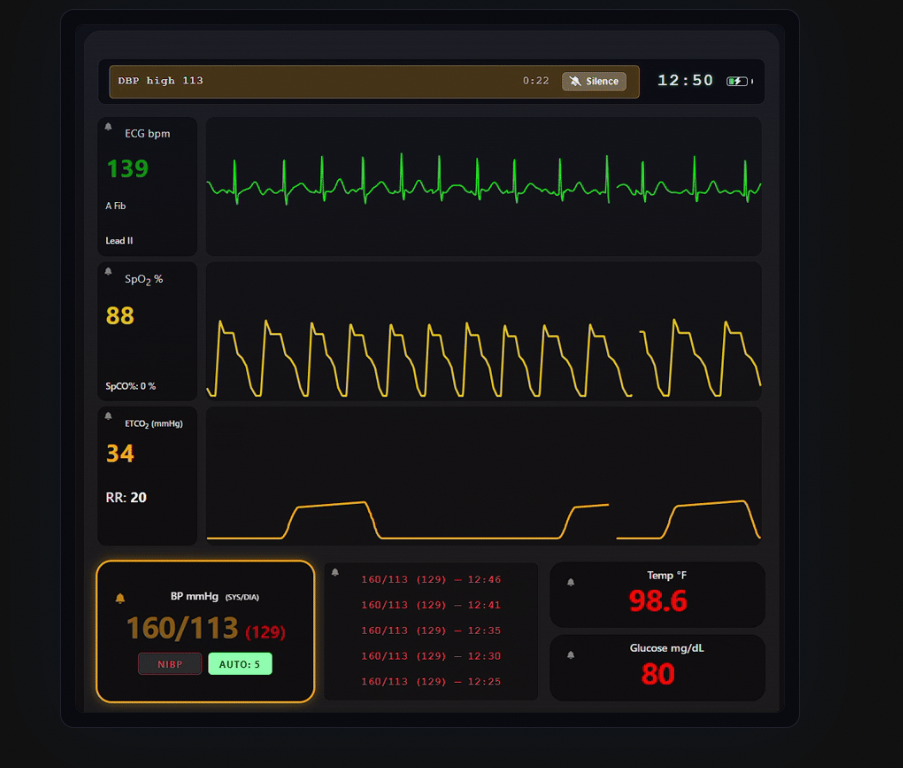
A display monitor showing a gradual HR increase and BP decline over 10 minutes tells you more than any single set of values in isolation. This is why continuous monitoring and trend recognition matter most in this population.
Practice Recognizing These Ranges on a Live Monitor
Reading a vital signs chart builds knowledge. Recognizing abnormal values on a live display under pressure builds clinical judgment. The gap between the two is where EMS students most often struggle in real scenarios.
TrainingMonitor.app is a free patient vitals monitor browser-based platform built for EMS educators and students.
Instructors can control vital signs parameters, setting pediatric or geriatric parameters on the patient vitals monitor display, run deteriorating scenarios, and use the integrated ecg simulator and cardiac rhythm simulator to add the cardiac rhythm component to any age-based clinical scenario.
Students see the same live display on their own devices building the pattern recognition that transforms reference knowledge into clinical readiness.
No hardware. No subscription. Free permanently. Visit TrainingMonitor.app and start practicing today.
Frequently Asked Questions
What are normal vital signs for a child by age?
Normal pediatric vital signs change with age. Heart and respiratory rates gradually decrease from infancy to adolescence, while blood pressure steadily increases toward adult values.
How do geriatric vital signs differ from adult vital signs?
Older adults often have reduced physiological responses. Medications such as beta-blockers can mask tachycardia, and seemingly normal blood pressure may indicate relative hypotension. Serial vital sign assessments are more reliable than a single reading.
What is the minimum blood pressure for a child?
For children aged 1–10 years, the minimum acceptable systolic blood pressure is 70 + (2 × age in years). Values below this threshold suggest hypotension and require immediate intervention.Normal Vital Signs by Age: Complete EMS Reference Guide